





Below is a selection from Lantmännen’s more than 90 newsroom posts during 2025. It has been a journey through academia and politics, imports and exports, trade balances and investments. The common thread has been food production, preparedness and farm profitability—without compromising sustainability.
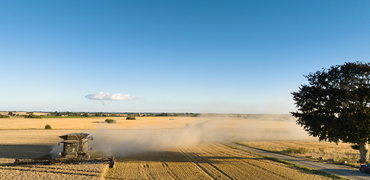
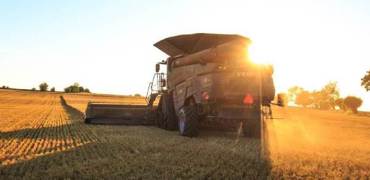
As usual, the harvest took center stage. It gave Lantmännen opportunities to talk about agriculture and the food sector in morning shows, in newsrooms and—most importantly—where everything happens: on farmers’ fields and farms. Lantmännen explained, and repeated, the paradox of high volumes but low profitability.
Lantmännen also invested billions of SEK this year in infrastructure and facilities, with a clear purpose: to create the greatest possible value—from field to fork—for our members.
Full-year results for 2024 reported the highest operating profit in Lantmännens history. In addition to the SEK 1 billion dividend, the Board decided on an extra dividend to members, conditional on the completion of the sale of Swecon. Together, the dividends could amount to nearly SEK 2 billion for Lantmännen’s members – 17,000 Swedish farmers.
Lantmännen published news about this and much more during 2025. Read a few examples below.
Results and organization
The year began with the announcement that Lantmännen delivered an operating profit of SEK 2,868 million for the 2024 financial year. The record result laid the foundation for an ordinary dividend of SEK 1.125 billion—the second-highest in the company’s history.
"Over the past decade, Lantmännen has grown substantially and consistently delivered strong results—while continuing to make major investments to drive growth in Swedish agriculture, Swedish food production and our international operations," said Magnus Kagevik, Lantmännen’s CEO and Group President.
Toward year-end, the dividend was supplemented by a decision on an extra dividend of SEK 750 million, conditional on the completion of the sale of Swecon.
"I know that the money is needed on the farms, and it is gratifying that Lantmännen can continue to contribute to the development of Swedish farming and an increased Swedish primary production," said Jan-Erik Hansson, Chair of the Board of Lantmännen.
The first four-month period of 2025 delivered a lower result, while a cost-savings program of SEK 500 million was presented. The second four-month period delivered a higher result, mainly driven by a large Swedish harvest, effects of the ongoing savings program, and results from acquired and divested operations.
After a long and appreciated tenure as Chair, Per Lindahl declined re-election at the Annual General Meeting. He was succeeded by Jan-Erik Hansson, who has deep experience in agriculture and is also a member of Lantmännen’s Board.
The harvest
The 2025 harvest year illustrated the complex economic reality of farming. Volumes were good, but for many growers the financial gain failed to materialize, due to globally depressed grain prices combined with high input costs.
It began with spring fieldwork, where Lantmännen expressed cautious optimism.
The harvest forecast was presented in early July. Lantmännen engaged with Sweden’s largest media outlets, and held several press events on farms. The forecast pointed to an average harvest. Lantmännen also emphasized the importance of domestic food production and Swedish inputs to reduce import dependence.
The harvest totaled just over six million tonnes, according to the Swedish Board of Agriculture (Jordbruksverket) October summary. Quality was generally good.
"But despite the volumes and the good quality, it will be difficult for many arable farmers to make ends meet when grain prices are under pressure and input costs remain high," said Per Germundsson, Grain Director at Lantmännen.
Investments
2025 was a year of major industrial investments to develop and secure Sweden’s future food production and infrastructure.
Lantmännen Unibake continued investing in Örebro. In late May, the company announced an investment of SEK 700 million in a new facility for the Group brand Korvbrödsbagarn.
In December, Lantmännen communicated the halfway point in its major investment in Lidköping. The facility—supported by the European Investment Bank (EIB)—is the largest of its kind in Sweden and is expected to be completed in the first half of 2027. The support underscores the project’s importance for Europe’s food preparedness.
Lantmännen also continued investing in plant breeding. This helps develop crops adapted to the Swedish climate, which can support growth and, over time, stronger preparedness. The latest example comes from Svalöv, where Lantmännen is investing SEK 100 million.
"By developing the plant breeding of the future, we want to contribute to a stronger Swedish agriculture," said Lars-Gunnar Edh, Head of Lantmännen’s Agriculture Division.
Lantmännen Fastigheter communicated a project in Skåne where it plans around 1,900 homes in a mixed development, with retail, school, childcare and other community services in a nature-adjacent setting by the Kävlingeån river.
Tillväxtbolaget in which Lantmännen is a co-owner is an initiative to create better conditions for today’s and tomorrow’s farming—especially for the next generation. Its top-up loans have enabled investments of more than SEK 3.5 billion in around 120 farm businesses, and the recipients are, relative to the farming community overall, significantly younger.
Production, exports and preparedness
Lantmännen reiterated that preparedness, production and exports are three parts of the same whole. More production and more exports reinforce each other, resulting in more robust food preparedness. In short: tax revenue, jobs, industrial development and resilience.
During the year, Sweden’s food preparedness took clear steps forward through government decisions on preparedness stocks, but also through international cooperation and export progress. Below is a selection.
In late March, Lantmännen welcomed Food Strategy 2.0 (Livsmedelsstrategin 2.0), highlighting five key areas in particular: production, preparedness, food quality, climate adaptation, and research and innovation.
The company also views exports as crucial for profitability and job creation. Toward the end of the year, Lantmännen welcomed the Swedish Board of Agriculture’s (Jordbruksverket) proposed targets for Swedish food production. The proposal clearly reflects an ambition to increase Swedish food production in both crop and livestock farming, according to Lantmännen.
Exports are one factor behind increased food production and agricultural development. Lantmännen’s facility in Hargshamn carried out a targeted export effort in late summer. Over three days—around the clock—33,000 tonnes of milling wheat were loaded onto a large vessel bound for Spain. The volume corresponded to more than 800 truckloads on a single ship.
"With this facility, we can load larger vessels than before," said Per Germundsson, Grain Director at Lantmännen.
In Almedalen, Lantmännen focused on strengthening food preparedness and increasing food production and exports. Lantmännen and Arla also hosted a seminar on preparedness in a European context.
Lantmännen continued the same theme in the media. “It is difficult to defend a country while hungry” was the headline of Lantmännen’s op-ed in Dagens industri, published the same day Lantmännen and Arla hosted a seminar in Almedalen on preparedness in a European context.
The same message was delivered by Lantmännen on stage at a parliamentary seminar, where Vattenfall and Saab also participated.
When the Swedish Civil Contingencies Agency (MSB, Myndigheten för samhällsskydd och beredskap) organized Preparedness Week (Beredskapsveckan), Lantmännen presented figures on Swedes’ views of Sweden’s food preparedness. A survey by Novus, commissioned by Lantmännen, showed that two in three Swedes are concerned about food supply during crisis and war. The concern has increased compared with last year.
International dialogues, projects and partnerships were high on the agenda in 2025.
Lantmännen held several meetings with the EU during the year, including when EU Agriculture Commissioner Christophe Hansen, Environment Commissioner Jessika Roswall and Sweden’s Minister for Rural Affairs Peter Kullgren visited Backa gård in Vallentuna. There, the Federation of Swedish Farmers (LRF, Lantbrukarnas Riksförbund) and Lantmännen provided an in-depth view of Swedish agriculture. Lantmännen emphasized the need to strengthen agricultural competitiveness and EU support for bioenergy.
Minister for Rural Affairs Peter Kullgren visited China in November together with Lantmännen. Export protocols for oats and malt were signed—an important step forward for Swedish food exports.
"Increased exports are crucial if we are to raise food production in Sweden," said Per Arfvidsson, Deputy CEO of Lantmännen.
Exports were a recurring theme at many political events in which Lantmännen participated during the year. In early September, Lantmännen joined a Swedish-Finnish export delegation to Japan and South Korea to showcase the Swedish food sector’s contribution to healthy, high-quality food.
Sustainability, health and well-being
Lantmännen has run the farming program Climate & Nature (Klimat & Natur) for a decade, as a clear initiative for more sustainable food production. The program has, among other things, enabled a fossil-free food value chain at scale. In addition to Lantmännen’s own brands, other brands have also joined the program. The program, which began in Sweden, has now expanded across the Nordics.
Another milestone was reached when Coop joined Climate & Nature at the start of the year. The partnership means that the program—which reduces climate impact by up to 30 percent—now gains broader exposure to consumers.
Lantmännen Cerealia, with the brands AXA and Kungsörnen, deepens its climate commitment within Climate & Nature by including fossil-free plant nutritions, achieving 45 percent lower climate impact.
It was also communicated that Spendrups and Lantmännen agreed to expand the scope of the same program, resulting in annual climate savings equivalent to nearly 4,000 metric tons of carbon dioxide equivalents. The ambition is for the program to cover all of Spendrups’ needs for malting barley within a few years.
Scan Sverige reported further sustainability progress, including its sustainability premium. The message was that Swedish meat production is not only ready for transition—it is already underway. A majority of Scan’s suppliers now meet stricter requirements for climate, biodiversity and animal welfare.
To adapt cultivation to climate change and meet the need for domestic food production, research and development are required—particularly in plant breeding. Lantmännen and others debated this in Svenska Dagbladet and ATL in May.
Corporate transactions
Lantmännen has signed an agreement to divest Swecon to Volvo Construction Equipment.
In February, Scan Sverige announced the acquisition of Lindvalls Chark AB. This broadens the business and strengthens the company’s position as Sweden’s leading meat and charcuterie company.
Lantmännen has signed an agreement to acquire Leipurin and its operations in Sweden, Finland, Estonia, Latvia and Lithuania. Leipurin is a leading supplier of ingredients to bakeries and the food industry.
Lantmännen Unibake, one of Europe’s largest bakery groups and part of the Swedish agricultural cooperative Lantmännen, acquired Boboli Benelux B.V. a Dutch leader in savoury bakery products.
Through another acquisition—Ekobenz—the portfolio in liquid biofuels was expanded, complementing existing production of ethanol and biogas.
The year ended with the news that Lantmännen is expanding in Italy by signing an agreement to acquire Panificio San Francesco, an Italian producer of frozen bread for retail customers.
Appointments
Lantmännen’s long-term work with expertise, knowledge sharing and responsibility continued to be recognized in 2025, with top rankings in several major surveys.
Lantmännen is ranked as the second most meaningful company in Sweden, only behind IKEA, according to the Lynxeye Purpose Index presented early in the year.
Each year, 25,000 Swedes rank companies’ sustainability work in Europe’s largest brand study on sustainability—Sustainable Brand Index. Only three Swedish companies have achieved a top placement in every one of the study’s 15 years—Lantmännen is one of them. This year, Lantmännen ranked No. 1 among food companies and No. 4 overall.
Lantmännen has long worked to attract tomorrow’s talent. This was recognized by Karriärföretagen, which named Lantmännen one of Sweden’s most attractive employers for the seventh consecutive year.
For more information, please contact:
Lantmännen's Press Office
Tel: +46 10 556 88 00
E-mail: press@lantmannen.com